



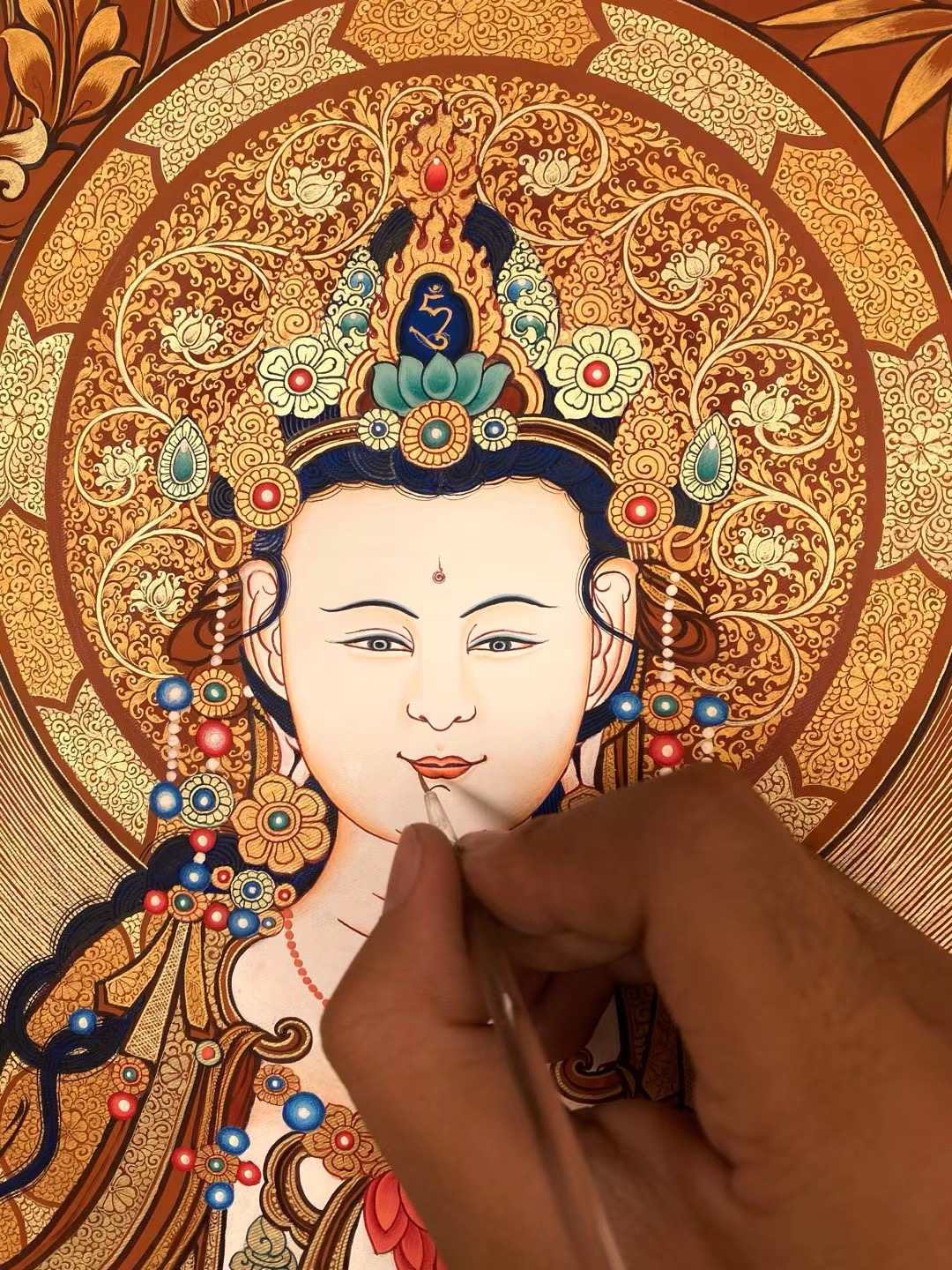
All colors and substrates in Thangka are strictly derived from natural minerals, plants, animal materials, and precious metals, reflecting reverence and admiration for the beauty of natural origins. The traditional Tibetan mineral and plant pigment making technique was inscribed on the National Intangible Cultural Heritage List in 2011. Traditional Thangka painters make and mix their own pigments, starting with simply processed ores and relying entirely on personal experience to process them into pigments. A good Thangka is generally painted with more than 30 colors, some with as many as 50, among which white, yellow, red, and blue are the four most common basic colors.
Basic Materials
Turquoise (Green)
Natural Mineral
Natural mineral used for painting landscapes and ornaments, bringing to Thangka the tranquil color symbolizing vitality and eternity.
Lapis Lazuli (Blue)
Natural Mineral
Natural mineral, the natural crystalline indigo is the core pigment for depicting the Buddhist sky and sacred majesty.
Gold (Yellow)
Precious Metal
Precious metal, gold is hand-hammered by craftsmen into gold leaf or gold powder, infusing Thangka with immortal sacred radiance and wisdom symbolism.
Cinnabar (Red)
Natural Mineral
Natural mineral, the natural red hue is the source of power for expressing cracked porcelain, flames, and vitality.
Realgar (Yellow)
Natural Mineral
Natural mineral, the bright natural yellow is often used to embellish sacred objects and ornate decorations, adding dignity and auspiciousness.
Deer Horn Stone (White)
Natural Mineral
Natural minerals including chalk, white conch shells, mica, kaolin, pearls, and brick dust, used as the foundation for expressing pure light, snow-capped mountains, and clouds.
Saffron (Preservative)
Medicinal Plant
Medicinal plant, its juice not only serves as a natural preservative and color fixative but is also believed to add purifying blessings to the artwork.
Pure Cotton Cloth (Base)
Natural Plant Fiber
Pure cotton canvas woven from natural plant fibers, carefully processed to become a solid and pure foundation that carries all colors.